GMMCO works with customers to plan fleet requirements in line with project milestones and encourages early equipment planning

ANUJ KEOLIYA
Head, Surface Mining, GMMCO
How do you evaluate the current demand trajectory for mining equipment in India, and what major growth catalysts are driving capital expenditure this fiscal year?
Demand for mining equipment in India remains encouraging, supported by the country's growing energy, infrastructure, steel and cement requirements. Coal continues to be a significant driver, while the expansion of iron ore, limestone and emerging mineral projects is creating opportunities across equipment categories.
However, capital expenditure decisions are becoming more selective. Mine operationalisation, tender timelines, project economics and financing influence when customers invest. Increasingly, the question is not simply how many machines to purchase, but how much sustainable output each investment can deliver.
As production requirements grow, demand for higher-capacity, application-matched equipment will be accompanied by greater interest in digital fleet management, safety technology and lifecycle services. We see this as a shift towards capital productivity, where equipment selection, utilisation and long-term operating costs are evaluated together.
How is GMMCO leveraging advanced technologies such as automation, IoT, AI and electrification to address the evolving productivity demands of the mining sector?
At GMMCO, we view technology through the outcomes it delivers: improved productivity, higher equipment availability, greater safety and better total cost of ownership. Our partnership with Caterpillar allows us to combine advanced technologies with application expertise and on-ground support.
Cat VisionLink helps customers monitor utilisation, fuel consumption, idle time and maintenance needs. GMMCO Assist adds cloud-based machine health insights to support faster diagnosis and service response. Together, these tools help teams move from reactive decisions towards more proactive fleet management.
Automation is another important development. The Cat D11 Semi-Autonomous Tractor System deployed at Adani's Parsa East–Kanta Basan mines, identified as Asia's first such deployment, demonstrates the potential of advanced dozing technology in Indian conditions. Safety solutions, including collision avoidance and driver monitoring systems, can further reduce operational risks.
Electrification and alternative power technologies are also areas to watch, although adoption must reflect site infrastructure, duty cycles and commercial viability. Our focus is on implementing technologies that solve real customer problems, rather than introducing innovation for its own sake.
What are the major supply chain and operational challenges currently impacting mining equipment manufacturers in India, and how are these challenges being addressed?
Mining equipment supply chains must balance long manufacturing and component lead times with project schedules that can change quickly. Global logistics disruptions, geopolitical uncertainty and delays in tender finalisation or mine development make forecasting particularly challenging.
For customers, the impact extends beyond initial delivery. Availability of critical parts, service expertise and timely repairs directly affects production continuity. Addressing these challenges calls for closer coordination between manufacturers, dealers and mine operators.
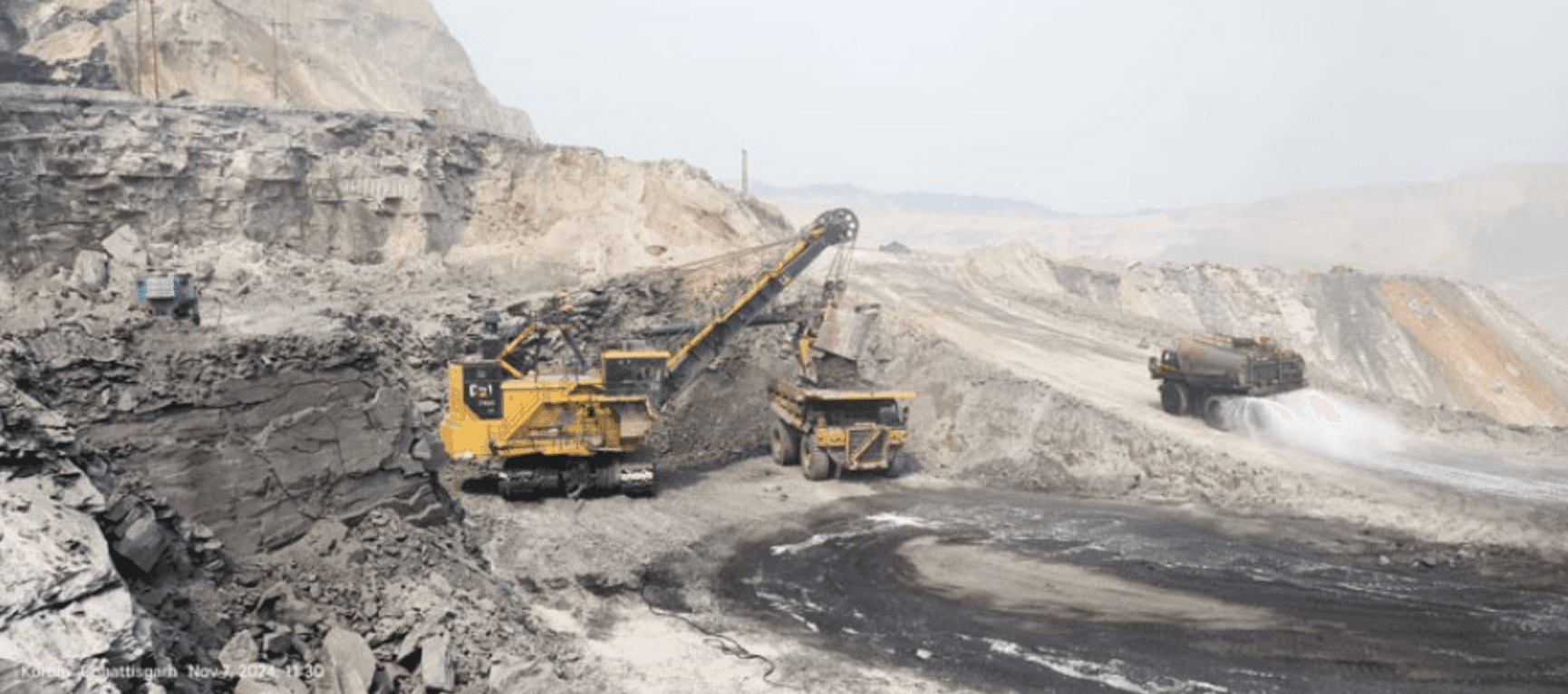
With the industry increasingly focusing on green mining and sustainability, what eco-friendly innovations or emission-reduction solutions are being introduced across the sector?
Sustainable mining increasingly means improving resource efficiency alongside environmental performance. One practical measure is reducing fuel consumed per tonne of material moved. Appropriate machine sizing, efficient engines, better fleet matching and reduced idle time can make a meaningful difference.
The sector is also exploring surface mining methods where suitable, conveyor-based material movement, alternative fuel solutions and lower-emission technologies. Their effectiveness depends on mine design, infrastructure, operating conditions and economics; no single solution works everywhere.
Digital tools strengthen this approach. Cat VisionLink gives customers visibility into fuel use and idling, helping identify opportunities to improve operating practices. Semi-autonomous dozing can support more consistent operations in suitable applications. Meanwhile, component and machine rebuilds extend equipment life and help customers extract greater value from existing assets.
At GMMCO, we believe sustainability is most effective when built into everyday operating decisions, supported by the right equipment, data-driven insights and responsible lifecycle management.
How do you view the growth trajectory and investment climate for mining machinery in India over the next few years, particularly in light of evolving government policies and infrastructure demand?
Our outlook for India's mining machinery sector remains positive. Infrastructure investment, industrial expansion, domestic mineral production and the National Critical Mineral Mission provide important long-term growth drivers. Mineral block auctions and greater attention to resource security should also create opportunities as projects progress from allocation to production.
Nevertheless, investment will remain closely linked to project execution, regulatory clearances, production economics and the availability of supporting infrastructure. Customers are likely to place greater emphasis on fleet performance, equipment reliability and predictable operating costs before committing capital.
This creates opportunities not only for new machines, but also for technology upgrades, maintenance solutions and rebuild programmes. GMMCO's focus is to support customers through an integrated offering that combines Caterpillar equipment, application expertise, digital solutions and local service capabilities. We see long-term value in helping mines improve output and availability throughout the equipment lifecycle.
What role do after-sales service, operator training and predictive maintenance play in maintaining a competitive advantage in today's mining equipment market?
In mining, an unplanned stoppage can affect the productivity of an entire operation. That makes uptime, rather than machine performance alone, a critical measure of value. Fast access to parts, responsive technical support and well-planned maintenance are essential to achieving it.
At GMMCO, Caterpillar-certified workshops, our service network and Workshop-on-Wheels help customers maintain and restore equipment performance. Cat VisionLink and GMMCO Assist provide machine and operating insights that can support earlier intervention and more informed maintenance decisions.
Operator training is equally important. Skilled operators can improve safety, reduce unnecessary fuel consumption and limit avoidable wear. Simulator-based training helps develop practical capability, while collision avoidance and driver safety technologies offer additional protection in demanding environments.
Predictive maintenance, however, is only as effective as the action it enables. Combining reliable data with trained technicians, available parts and clear service processes helps turn alerts into results. This integration of people, technology and aftermarket support is how we help customers protect their investments and sustain production.
Anuj Keoliya
Head, Surface Mining
GMMCO Ltd (A CKA Birla Group company)
Originally published on
Equipment Times