Skill Displacement Is The Bigger Risk
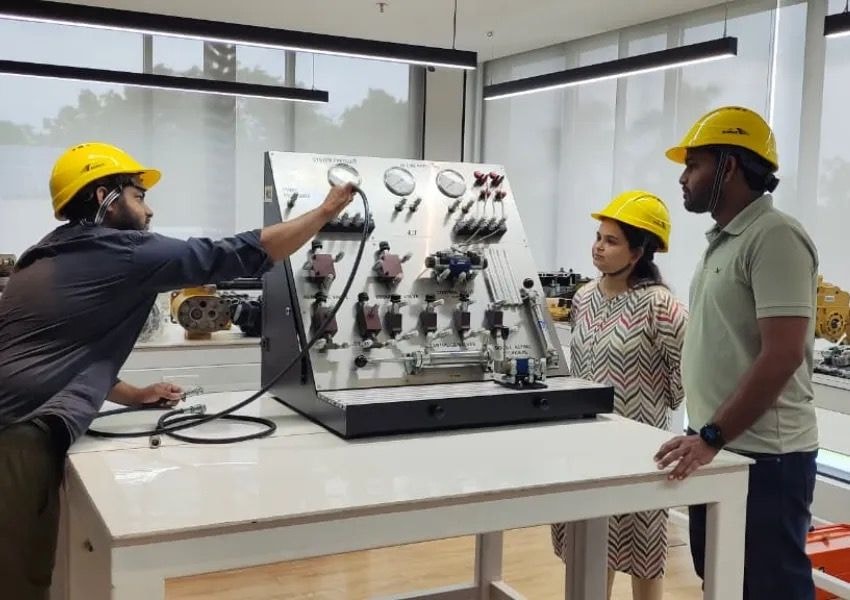

Technology should not simply happen to employees; people must be equipped to understand it, question it, apply it and improve the work around it.
Shahid Ashraf
CHRO, GMMCO
Artificial Intelligence and automation are reshaping the workplace, bringing both opportunity and apprehension. For employees, the question is no longer whether AI will change their work, but how they can evolve their skills to remain relevant in a rapidly transforming environment.
Leaders cannot respond to this anxiety with reassurance alone. The greater responsibility is to redesign work, capability and culture so that people can move forward with technology, not feel displaced by it.
At GMMCO, this transformation is already underway. Digital tools, automation and data-led processes are helping us strengthen customer engagement, improve decision-making and drive operational efficiency, while creating new opportunities for employees to build capabilities and contribute greater value. AI-enabled customer outreach, digital lead management and analytics-led dashboards are beginning to change not only how work gets done, but also the capabilities our people need to succeed.
That makes upskilling and reskilling a present-day priority, not a future agenda. The biggest risk in the age of AI may not be job displacement alone. It may be skill displacement.
This requires a shift from conventional training to continuous capability-building. Employees need greater digital fluency, exposure to emerging technologies and role-based learning that helps them apply technology meaningfully in day-to-day work.
At GMMCO, this thinking aligns closely with our culture of the Power of 3Es: Empowerment, Excellence and Entrepreneurship. Empowerment is about giving people the confidence, capability and ownership to embrace new ways of working. Excellence means continuously raising the bar on performance, learning and customer value. Entrepreneurship encourages people to question established ways of working, experiment with possibilities and take ownership of outcomes. In an AI-enabled workplace, these are not just cultural values; they are transformation capabilities.
Technology should not simply happen to employees. People must be equipped to understand it, question it, apply it and improve the work around it. Introducing tools is easy. Building confidence, changing behaviours and helping people understand where human judgement adds the greatest value is the harder task.
As AI takes on more execution, human capabilities such as judgement, critical thinking, adaptability, empathy, collaboration and accountability become even more important. But technology cannot replace the ability to understand a customer's operating reality, build trust and take responsibility for outcomes. The future is therefore not human versus machine. It is about designing a stronger human–technology partnership.
For HR leaders, this represents a fundamental shift in responsibility. Our role is no longer limited to preparing people for today's jobs, but to building the capabilities they will need for tomorrow. We need to anticipate tomorrow's capabilities, identify skill gaps early and create clear learning and transition pathways for employees. Managers will be equally pivotal. They must translate AI ambition into everyday work, encourage experimentation, support learning and address apprehension with transparency.
Trust will determine the speed of adoption. When employees understand why technology is being introduced, how their roles may evolve and how the organisation is investing in their capability, uncertainty begins to reduce. When people participate in transformation rather than simply experience it, resistance can become curiosity and curiosity can become innovation.
The organisations that will lead in the AI era may not be those that automate the fastest. They will be those that learn, adapt and redesign work the fastest, while preserving the human strengths that make transformation sustainable.
Technology will redefine how work gets done. But it is leadership that will determine whether people are displaced by change or empowered to grow with it. The future of work must be built not just around smarter technology, but around more capable, confident and future-ready people.
Shahid Ashraf
CHRO, GMMCO
GMMCO Ltd (A CKA Birla Group company)
Originally published on
BW People